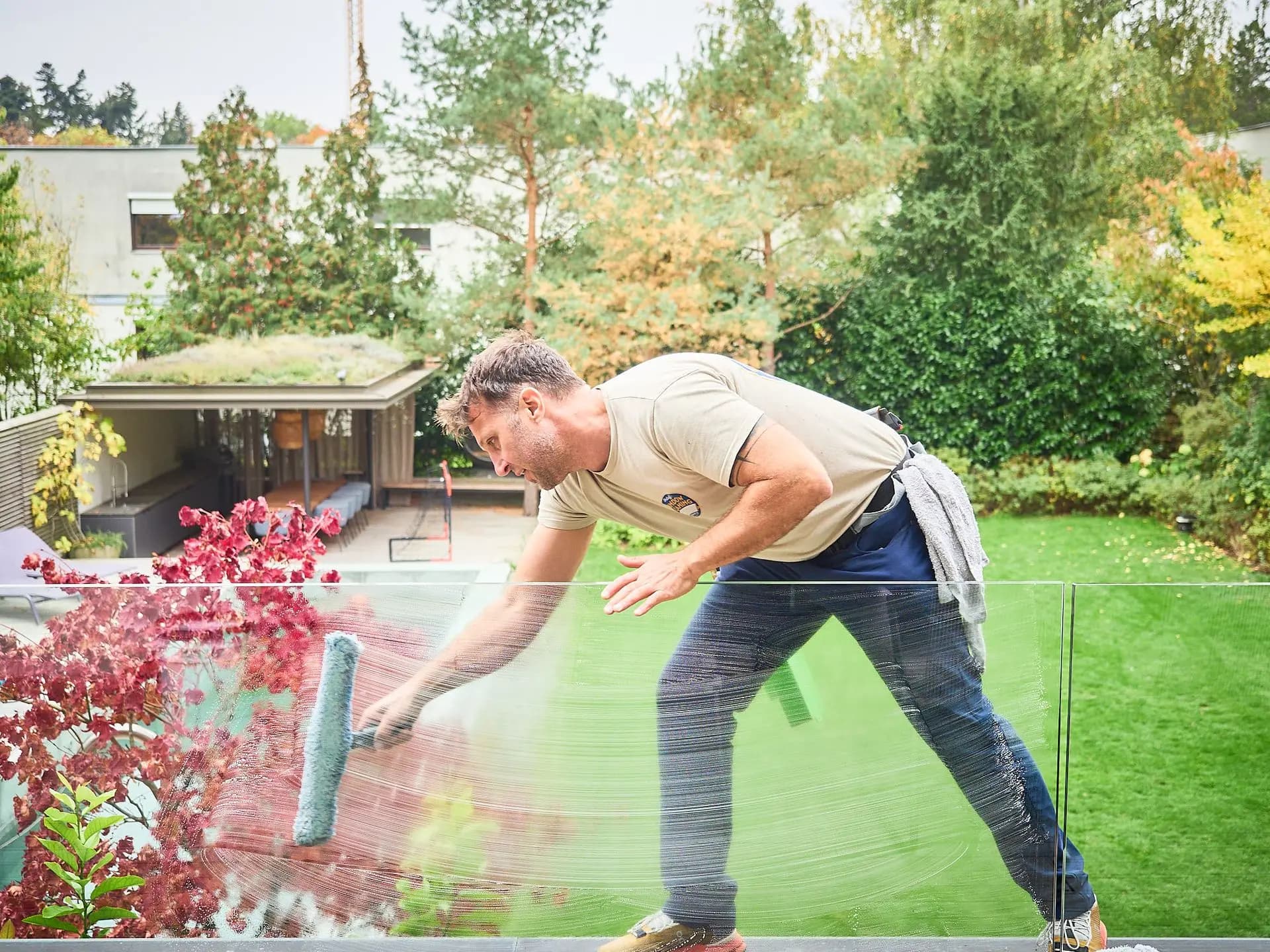
Glass railings and balustrades can completely change the feel of a space. They open up sight lines, let light flow through, and add a clean, modern edge to balconies, staircases, and terraces. I work with glass features like these every week across Vienna, and I can tell you: they look stunning when they are well-maintained, and terrible when they are not.
Before you buy, here is what I think you should know.
Does Glass Fit Your Space?
Glass railings work beautifully in modern and minimalist settings. The transparency creates an open feel, and the clean lines complement contemporary architecture. But they do not suit every style.
Before committing, consider how the glass will affect the overall atmosphere. In a traditional space with heavy timber or ornate detailing, glass can feel out of place. In a modern apartment or a commercial space with clean lines, it can be the feature that ties everything together.
When the design works, glass railings become a genuine focal point. When it does not, they look like an afterthought.
Safety Standards Are Not Optional
This is non-negotiable. Glass railings must meet local building codes and safety standards, and in Austria those requirements are specific.
Key requirements to verify:
- Glass thickness: building codes specify minimum thickness based on panel size and location
- Glass type: tempered or laminated glass is required for railings. Standard float glass is not safe for this application.
- Height and spacing: there are minimum height requirements and maximum gap widths between panels
- Hardware: brackets, clips, and fasteners must be rated for the weight and stress they will bear
Tempered glass shatters into small, rounded fragments if it breaks. Laminated glass holds together even when cracked. Both are dramatically safer than standard glass. Make sure your installer uses one or both.
Plan for Cleaning Before You Install
This is the part most people do not think about until it is too late. Glass is transparent. That transparency means every fingerprint, water spot, and streak is visible.
A glass railing on a balcony collects rain spots, dust, and mineral deposits. Interior glass railings collect fingerprints, especially at hand height. If you have children or pets, the lower sections will need frequent attention.
Before installation, ask yourself:
- Can I access both sides of every panel for cleaning?
- Am I willing to clean these surfaces regularly, or will I hire someone?
- Is the mounting system designed so I can reach the edges where glass meets hardware?
I have seen installations where one side of the glass is completely inaccessible without removing panels. That is a design failure, not a cleaning challenge.
The Real Cost
Glass railings cost more than wood or metal alternatives. The glass itself, the hardware, and the installation are all premium.
But the purchase price is not the full picture. Factor in:
- Regular cleaning: glass shows dirt more than any other railing material
- Potential repairs: a cracked panel is more expensive to replace than a wooden baluster
- Professional maintenance: depending on the installation, you may need a specialist for thorough cleaning
None of this means glass is a bad choice. It means you should budget for the ongoing cost, not only the upfront cost.
Environmental Factors Matter
Where you install glass railings affects how they age and how much work they need.
Outdoor considerations:
- UV exposure can affect certain coatings over time
- Rain and snow leave mineral deposits, especially in areas with hard water (like Vienna)
- Temperature swings cause expansion and contraction in the mounting hardware
- Wind-driven dust and debris can create micro-scratches on uncoated glass
Indoor considerations:
- Kitchens: cooking grease and steam settle on nearby glass surfaces
- Humidity: bathrooms and pool areas accelerate mineral buildup
- Construction: if work is happening nearby, dust and debris can damage glass
These factors should shape your cleaning schedule. A sheltered indoor railing needs less attention than a balcony railing facing a busy street.
Getting the Balance Right
Glass railings and balustrades are a long-term commitment. When chosen well and maintained properly, they elevate any space. When neglected, they become the thing everyone notices for the wrong reason.
My advice: choose the right glass for your environment, plan for maintenance from the start, and set a realistic cleaning schedule. If you do that, your glass railings will look as good in five years as they do on installation day.
If you need help with cleaning or maintenance for glass railings in Vienna, get in touch. I work with these features regularly and can set up a care plan that keeps them spotless.