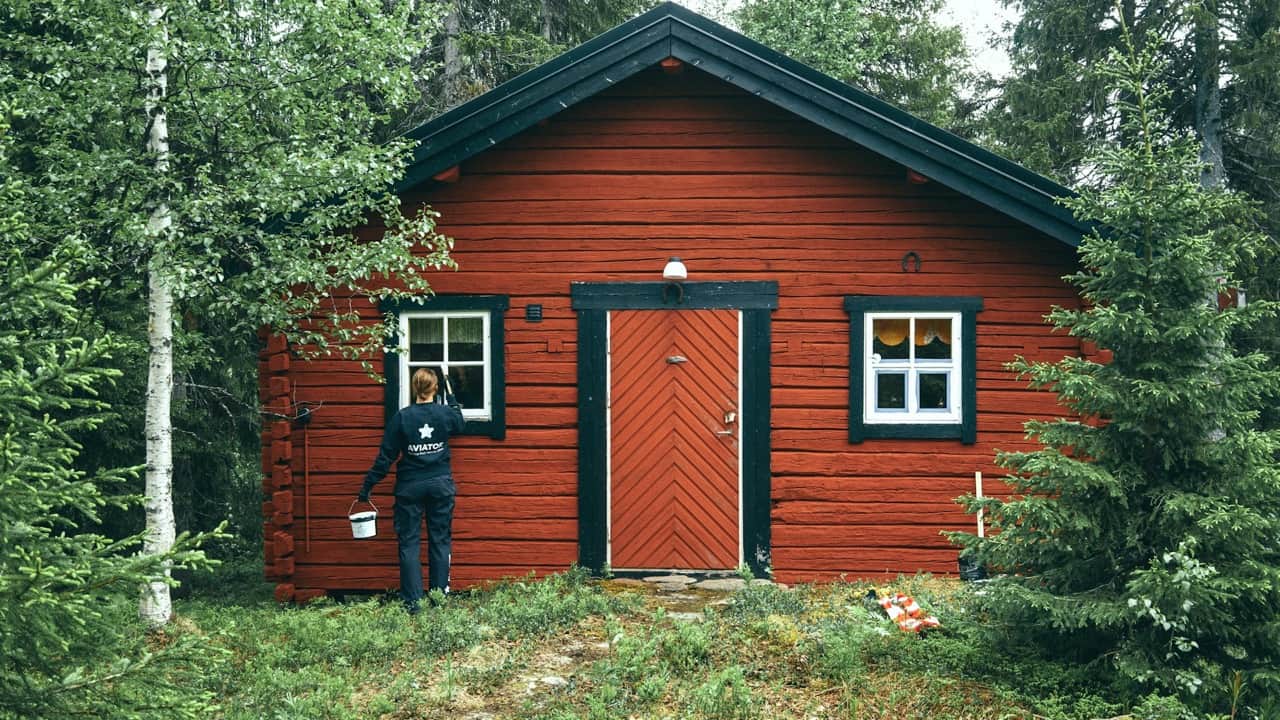
Fresh paint. Now the real work begins.
Having your home repainted is one of the best investments you can make. A fresh coat transforms a tired room into something that feels completely new. I see it every time I arrive at a client's place after a paint job: that smell of fresh paint, everything looking crisp and clean... and then I look at the windows.
Paint spatters on the glass. A smear in the corner of a pane. Overspray across the lower panel. And sometimes, worst of all, someone has already tried to "quickly wipe it off" with the wrong tool. Now there are fine scratches in the glass that will never go away.
In over 25 years as a professional window cleaner, working everywhere from Melbourne to Vienna, I've seen this scenario more times than I can count. And every single time, it could have been avoided with a little preparation and one clear principle:
Painters are experts at painting. Window cleaners are experts at glass. These two things should never be confused.
The problem nobody warns you about
When you hire a painter, whether for an interior refresh or a full exterior repaint, the focus is on walls, ceilings, trim, and facades. Painters know their craft. But the window glass sits right next to everything they're working on. And paint is an unforgiving material. Overspray happens. Drips happen. A loaded brush catches the frame and leaves a streak across the pane.
That's not the painter's fault. That's physics.
The real problem comes afterward. Many homeowners ask the painter to give the windows a quick wipe before leaving. And that's exactly where things go wrong.
A painter with a dry cloth, or worse, a razor blade, tries to scrape or wipe the paint away. Without the right tools, the right technique, and enough lubrication, the result is microscratches on the glass surface. Understanding how glass coatings work helps explain why this damage is often invisible until it is too late. They look harmless at first. But over time, dirt and dust settle into them, light refracts incorrectly, and a permanent haze develops on the glass that no amount of cleaning will ever remove.
I've been called out to windows that a well-meaning painter tried to "tidy up," only to have to explain to the homeowner why those marks are there to stay. Permanently.
Glass does not forgive. What is scratched stays scratched.
What paint actually does to glass
Fresh paint on glass is still manageable. Dried paint on glass requires experience, patience, and the right approach.
When paint dries on glass, it bonds with the surface. Water alone won't shift it. Wiping with a dry cloth pushes paint particles across the glass like sandpaper. The wrong chemicals, acetone, nail polish remover, harsh solvents, can sometimes help but can also etch the glass. This is especially true for windows with hard water mineral deposits or damage frames and seals if applied carelessly.
Oil-based paints are the most stubborn. They cure hard, bond strongly, and need specific solvents applied correctly to release from the glass without causing damage.
Latex and water-based paints are more forgiving if you catch them early. Within a few hours of application, a damp cloth can remove a lot. But once the paint has fully cured, you need precise scraping with the right tool, properly wetted, at the right angle.
That "right angle" matters more than most people realize. A razor blade held at 90 degrees to the glass will scratch it. The same blade at 45 degrees, on wet glass with the right solution, glides cleanly without causing damage. Professional window cleaners know this instinctively. It's muscle memory built over years.
A painter using the same tool without that experience? That's a gamble with your glass.
The bill nobody does the math on
Here's a calculation worth thinking through.
You save $300 to $500 by going with a cheaper painter. The job looks good. The walls are great. But the cleanup is rushed, and your windows now have paint spatters, smears, and a few fine scratches from an improvised wipe-down.
You call a window cleaner, ideally me, for an assessment. With light scratches, professional cleaning can improve the appearance. If the scratches are deep, and some are, the only real fix is glass replacement.
A standard double-pane window replacement runs around $200 to $500 depending on size and spec. High-end glazing or specialty units? Significantly more.
Suddenly your $300 to $500 saving has cost you twice that, or more.
Hire carefully. Protect your windows before the painter starts. And book a professional window cleaner for the post-job cleanup. That's not an added expense. That's protecting what you already have.
How to protect your windows before the painter arrives
This is the conversation you need to have before the first brushstroke, not after.
1. Ask your painter directly how they plan to protect the glass. A professional painter will have a clear answer. They'll talk about masking tape, plastic sheeting, and edge protection around the frames. If they hesitate or brush the question off, that's a signal worth taking seriously.
2. Standard masking tape isn't enough on glass. Regular painter's tape can pull paint off frames when removed, leave adhesive residue on the glass, and doesn't seal tightly enough to stop paint from creeping underneath. Proper glass-specific masking products, like 3M ScotchBlue or comparable alternatives, are the right tool for the job.
3. For exterior work, full plastic sheeting is the gold standard. Secured around the entire frame with masking tape, sheeting provides complete protection from overspray, drips, and roller splatter. It takes about 10 minutes per window to apply. It saves hours of remedial work.
4. Ask the painter to leave the window cleaning to you. Most professional painters are genuinely relieved to hear this. It's simply not their area of expertise. A clear agreement upfront, "Please protect the glass during the work, and I'll arrange professional cleaning afterward," means everyone does what they do best. And the result is better for everyone.
What professional window cleaning after a paint job actually involves
When I arrive after a paint job, here's how it goes, and why each step matters.
First, an assessment. Is the paint water-based or oil-based? How long has it been sitting on the glass? Are there existing scratches? Is the surrounding frame freshly painted and in need of protection during cleaning? This takes a few minutes but determines everything that follows.
Then, preparing the glass. Pure water, the right cleaning solution, and full saturation of the surface before any tool touches the glass. No dry scraping. Ever.
For paint spots and overspray, I use a professional glass scraper at the correct angle, with constant lubrication, in smooth, even strokes. Small spots come off cleanly. Larger areas need patience and multiple passes.
For stubborn oil-based paint, I apply the appropriate solvent directly to a cloth, targeting only the glass while protecting the surrounding frames and seals. Then a full squeegee clean with pure water to remove every trace of residue.
The finish is a streak-free polish using my pure water system. The result isn't just "paint removed." It's a crystal-clear window, cleaned inside and out, that looks better than it did before the paint job started.
That's why I always say: the painter makes the walls look beautiful. The window cleaner makes the whole room shine.
The right process for your next renovation project
A simple framework that saves money, protects your glass, and leads to a better result:
Before painting begins:
- Have a specific conversation about glass protection with your painter
- Confirm that masking tape and sheeting will be applied to all windows
- For exterior work, verify overspray protection is in place
During the work:
- Don't ask the painter to wipe paint off the glass as they go, the risk isn't worth it
- If you spot a large drip of fresh paint yourself, a damp cloth can catch it before it cures, but don't scrub
- Leave dried paint to the professionals
After the job is done:
- No DIY paint removal on glass with dry tools, abrasives, or random solvents
- Hire a professional window cleaner with experience in post-renovation cleanup
- Expect an honest assessment before work begins: if scratches are already present, you have the right to know before cleaning starts
A word on budget painters, and what you actually get
To be fair: there are excellent painters at every price point in this city, and expensive painters who cut corners on prep and cleanup. Price alone tells you very little.
What you're looking for is a painter who takes the whole job seriously, preparation, execution, and protecting every surface around the paintwork. A painter who masks your windows carefully is a painter who respects your home. That's what you're paying for.
On the subject of post-job cleanup: the painters I respect most are the ones who tell their clients upfront, "I'll do a great job on your walls and trim, but for the windows, please bring in a professional afterward." That's not passing the buck. That's being honest about where one person's expertise ends and another's begins.
I love that attitude. It's the same philosophy I bring to window cleaning. I'm good at windows. I'll tell you exactly what I can and can't do. And I deliver a result that lasts.
Crystal-clear windows after your paint job?
Orloff's has been cleaning Vienna's windows for over 15 years. Read about what 25 years of window cleaning taught me about buildings. We specialize in post-renovation and post-painting window cleaning: careful work around fresh frames, paint removal without glass damage, and every window left streak-free and spotless.
Had your home repainted recently, or planning a renovation and want to get the post-job cleanup right from the start? Get in touch. We'll give you an honest assessment, a clear quote, and do the work properly.
Book post-painting window cleaning with Orloff's now
Your painter made the walls look great. We make sure the light coming through your windows does justice to all of it.
Frequently asked questions
Can I remove paint from my windows myself? Small spots of fresh, water-based paint can often be wiped away with a damp cloth while still wet. Once paint has dried, especially oil-based paint, professional removal is strongly recommended. See our guide on when to clean yourself vs. hiring a pro. The risk of scratching the glass with DIY methods is high, and scratches in glass are permanent.
My painter left paint spatters on the windows. Who's responsible? That depends on your agreement. Most painting contracts include basic cleanup, but glass cleaning is often not explicitly covered. The safest approach is a clear agreement upfront: the painter protects the glass during the work, and a professional window cleaner handles the post-job cleanup.
Will professional window cleaning remove all the paint from my glass? In most cases, yes. With the right tools and technique, dried paint can be removed from glass without damage. However, if the paint has been left untreated for a long time, or if someone has already caused scratches with the wrong methods, some marks may be permanent. That's why we always start with an honest assessment.
How long should I wait after painting before booking a window clean? For interior work, most latex paints are surface-dry within 2 to 4 hours and fully cured within 2 to 4 weeks. For window cleaning, we recommend waiting at least 48 to 72 hours after the paint job is complete, so the paint on the surrounding frames has bonded well enough before we work around it.
Do you work on new construction and renovation projects? Yes. Post-construction and post-renovation window cleaning is one of our specialties. Whether it's a fresh paint job, a building renovation, or a new build, we have the tools and experience to bring your windows back to crystal-clear condition.
Justin Orloff has been a professional window cleaner since 1999, working on high-rises in Melbourne and family homes across Vienna. Orloff's Window Cleaning Service is booked months in advance, trusted by Vienna households, and proud of a 95% repeat client rate.
Does any of this apply to your situation?
I'd love to hear from you and continue the conversation about any of these topics.