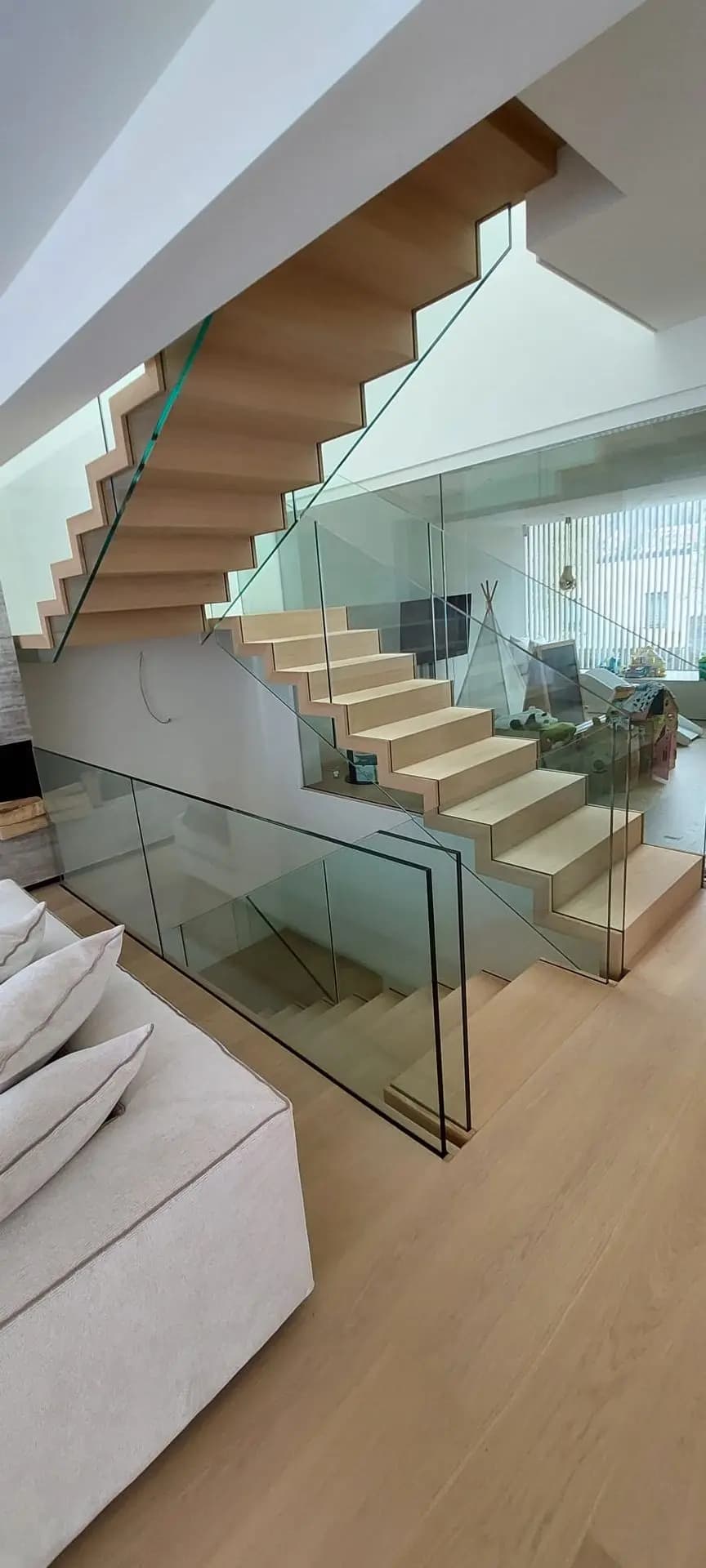
A glass staircase is one of those architectural features that stops people in their tracks. The transparency, the way light moves through the space, the clean lines. It looks incredible. But I have cleaned enough of them to know: they need specific care to stay that way.
Here is what I have learned from 25 years of working with glass surfaces, including staircases that cost more than most cars.
Why Glass Staircases Are Different
A glass staircase can transform an ordinary room into something striking. The transparency creates an open, airy feel. The clean lines add a refined touch. But all of that comes with a trade-off: glass shows everything.
Fingerprints. Footprints. Dust. Smudges from pets, children, and anyone who touches the railing on their way up. Standard windows collect dirt gradually. A glass staircase collects it in real time, in full view of everyone in the room.
The angles and connection points also make cleaning trickier than a flat pane. You cannot approach a staircase panel the same way you approach a window. The geometry is different, the access is different, and the consequences of doing it wrong are more visible.
Cleaning Techniques That Actually Work
Most people reach for household glass cleaner and paper towels. That is the fastest way to make a glass staircase look worse.
What works:
- Use a professional squeegee with a soft rubber blade. The same tool I use on high-end windows works on staircase panels.
- Use a microfiber scrubber, not paper towels. Paper leaves lint. Microfiber does not.
- Clean from top to bottom. Gravity is your friend.
- Use minimal cleaning solution. Too much soap leaves residue that catches light and shows streaks.
- Work in overlapping strokes at a consistent 45-degree angle.
The squeegee technique that works on windows applies here, with one adjustment: you are working at different angles on each panel, so you need to adapt your wrist position as you move through the structure.
Safety Comes First
Cleaning a glass staircase involves heights, wet surfaces, and awkward positions. I take this seriously, and you should too.
Key safety considerations:
- Wear non-slip shoes. Wet glass treads are dangerously slippery.
- If you need a ladder for upper sections, make sure it is stable and positioned on a flat surface. Never lean a ladder against glass.
- Keep cleaning solution away from the edges where glass meets metal or wood. Runoff can damage seals and hardware over time.
- If your staircase has open risers or gaps, be careful with dripping. Cleaning solution falling from above can stain surfaces below.
Choosing the Right Tools and Products
The tools make a real difference with glass staircases. Here is what I recommend:
- A professional-grade squeegee (Ettore or Unger, not hardware store brands)
- Microfiber scrubber sleeves
- A mild, streak-free glass cleaning solution, or a small amount of dish soap in water
- Lint-free detailing cloths for edges and connection points
- A small bucket or spray bottle
Avoid ammonia-based cleaners on coated glass. Some staircase glass has anti-fingerprint or anti-reflective coatings that ammonia can damage. If you are not sure what coating your glass has, ask the manufacturer or installer before cleaning.
Planning Maintenance Into the Design
If you are an architect, builder, or interior designer reading this: please think about cleaning access during the design phase. I have worked on glass staircases where certain panels are physically impossible to reach without dismantling hardware.
A few things to consider from the start:
- Can every glass panel be accessed from at least one side?
- Are the connection points designed so cleaning tools can reach the edges?
- Is there enough room to work safely around the structure?
- What type of glass are you specifying? Some coatings reduce fingerprint visibility and make maintenance easier.
Getting this right during design saves years of frustration later.
How Often Should You Clean?
It depends on traffic. A glass staircase in a busy household with children and pets needs attention every one to two weeks. In a show home or low-traffic space, monthly is usually enough.
Beyond regular cleaning, inspect the structural components at least twice a year. Check the brackets, clips, and fasteners that hold the glass in place. Look for any signs of wear, loosening, or corrosion. A well-maintained glass staircase is a safe staircase.
The Bottom Line
A glass staircase is a beautiful investment. Keeping it that way takes the right technique, the right tools, and a consistent routine. If you want to learn the proper squeegee technique and glass care fundamentals, I cover all of it in my training program at orloffs.com.
If you would rather have a professional handle it, get in touch. I clean glass staircases across Vienna and can assess yours in person.