TL;DR
- Drone-assisted facade cleaning is an emerging technology being piloted in Switzerland, not yet standard practice in Austria.
- Water without agitation produces a cleaner surface, but not a professional clean. Build-up needs physical contact to soften and remove properly.
- For most Vienna properties, rope access and pure-water systems with hands-on agitation remain the most precise and proven cleaning methods.
- Orloffs has been a professional window cleaning business for over 25 years. Glass facades fall within that expertise because a glass facade is, technically, also a window.
- Austrian regulations on commercial drone operation near residential properties remain strict and add practical barriers to adoption.
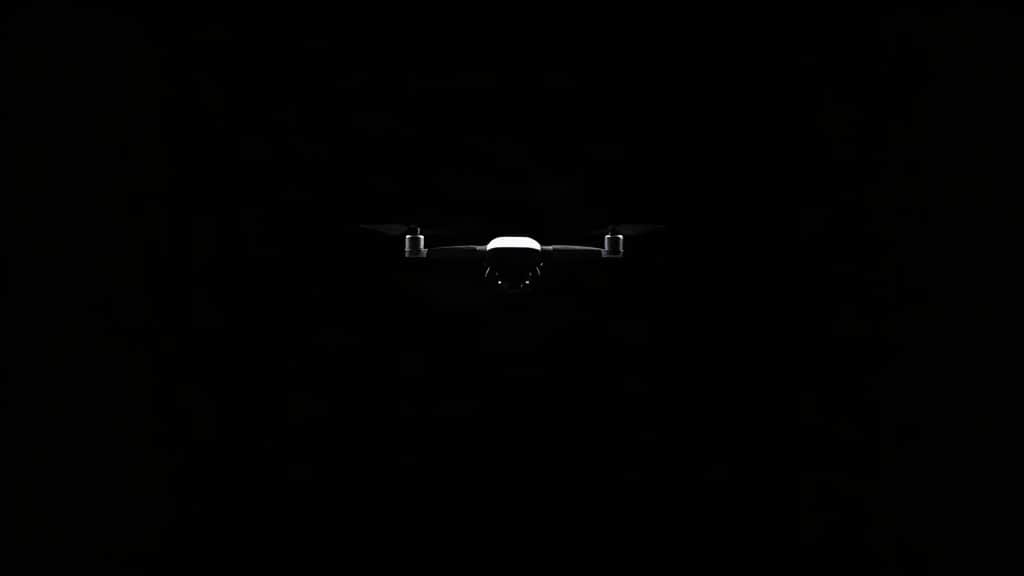
A drone hovers outside a glass facade on Zurich's Bahnhofstrasse. It carries a small rotating brush head and a water feed. It moves methodically across the surface, floor by floor, without a single person suspended on a rope. The footage is impressive. The internet called it the future of window and facade cleaning. I watched it carefully, because I have been a professional window cleaner for over 25 years, and I wanted to understand what was actually happening and what was not.
The honest answer is more nuanced than the headline. Drone facade cleaning is real. The Swiss are genuinely further along than most. But what it means for property owners in Vienna right now is a different question entirely, and one worth thinking through carefully before you hand your building's exterior to a technology still finding its limits.
The Problem No One Talks About With High Buildings
Cleaning the exterior of a building above the third floor is difficult, expensive, and sometimes dangerous. That is the plain truth. A standard extension pole reaches perhaps four to five metres. A water-fed pole system, like the pure-water equipment I use, reaches up to 24 metres. Beyond that, you are looking at scaffolding, cherry pickers, or rope access. Each option adds cost, complexity, and in the case of scaffolding, significant disruption to the building and its surroundings.
For property owners in Vienna, especially those with older Altbau facades, ornate stone facades, or large-format glass installations, the access problem is real. You want the facade cleaned. You do not want a scaffold standing in front of your building for a week. You do not want to close the pavement below. And you want the result to look right when it is done.
This is exactly the gap that drone technology is being designed to address. The question is whether it actually closes that gap yet, or whether it is still solving the problem in a laboratory while the building in front of you needs cleaning today.
What Is the Swiss Model and Who Is fassadenmax Zurich?
fassadenmax is a Zurich-based company that has been developing drone-assisted facade cleaning as a commercial service. They are among the first operators in the German-speaking world to move beyond drone inspection toward actual surface cleaning using drone-mounted tool heads. Their work has attracted significant attention in the trade press and on social media, and for good reason. The footage is striking, and the concept is genuinely innovative.
Their approach uses a drone equipped with a rotating cleaning attachment and a water supply, guided by an operator at ground level. The drone works across the facade surface systematically, and the operator monitors both the cleaning progress and the drone's positioning in real time. For large, relatively flat commercial glass surfaces, the results shown in their demonstrations are convincing.
It is worth noting that what they are demonstrating represents the leading edge of what is possible, not the current standard of what is available. Drone facade cleaning at this level requires significant investment in equipment, trained operators, regulatory clearance for each job, and the right building geometry to work effectively. It is not a service you can simply call and book for next Thursday.
A Clean Is Not a Professional Clean
This is the part that matters most, and the part that the demonstration videos never address. When water washes over a glass surface without physical agitation, it removes loose dirt. The glass looks better. It is, genuinely, cleaner than it was before. But in my experience, that is a clean. It is not a professional clean.
There is always a layer of build-up on glass that water alone cannot shift. Mineral deposits from rainwater run-off. Oxidised pollution film. Biological residue that has bonded to the surface over weeks or months. And then there are the obvious ones: a bird dropping baked onto glass for three months will not come off because a drone flies past and sprays water over it. That residue needs to be softened, loosened with physical contact, and removed deliberately. Soap on, agitate, remove, dry. That is the system. That is what produces a result you can stand behind.
To be fair, and I want to be fair, the glass after a drone pass is better than it was. It is cleaner. The technology works in the sense that it improves the surface. But there is a difference between improving a surface and delivering the standard that a professional window cleaner would consider finished. I have spent 25 years building that standard, and water without agitation does not meet it.
That said, I am genuinely interested in where this technology goes. The progress from where drone cleaning was five years ago to where it is today is real. If future systems can deliver controlled agitation at the glass surface with enough precision to handle varied build-up, the conversation changes. I am watching it closely, and I look forward to seeing what the next generation of this equipment can do.
Does Drone Facade Cleaning Actually Work?
For certain building types and surface profiles, yes, drone cleaning produces visible results. The key word is visible. Large, flat, commercial glass curtain walls on modern buildings are the ideal use case. The surface is uniform, the geometry is predictable, and the drone can maintain consistent distance. On these buildings, a drone cleaning system can cover significant surface area efficiently and without putting any person at height. The result will be an improvement. Whether it meets the standard of a professional clean depends on the level of soiling and how long it has been since the last proper service.
The limitations become clear quickly when you move away from that ideal scenario. Ornate facades with protruding elements, window surrounds, relief stonework, or complex reveal depths create geometry that current drone systems cannot navigate cleanly. The brush head that works well on flat glass loses effectiveness the moment it encounters a shadow gap, a protruding sill, or an irregular surface. Those areas either get missed entirely or require a second pass by a human operator anyway.
There is also the question of cleaning chemistry. Many facade surfaces, particularly natural stone, require specific cleaning agents applied with controlled dwell time and appropriate pressure. A drone carrying a water-fed brush cannot replicate the judgment a trained operator applies when working with different building materials and surface conditions. Limestone behaves differently from sandstone. Polished granite is not the same problem as exposed concrete. Getting this wrong does not mean a dirty building. It can mean permanent surface damage.
What Austrian Regulations Mean in Practice
Austria operates under EU drone regulations (U-Space framework and EASA categories), with additional national guidelines administered by Austro Control. Flying a commercially operated drone in an urban environment near residential buildings, pedestrian areas, or infrastructure requires specific category authorisation, operator licensing, and in many cases prior coordination with local authorities.
In Vienna specifically, the density of the built environment, the proximity of buildings to public spaces and traffic, and the presence of protected heritage zones create a regulatory environment that is genuinely restrictive for commercial drone operations. This is not bureaucratic obstruction. It is reasonable caution applied to an urban environment where a drone malfunction above a crowded street has serious consequences.
Any operator claiming to offer drone facade cleaning in Vienna as a routine service should be able to show you their operational authorisation documentation before any work begins. If they cannot, that is a significant red flag. The regulatory burden is real, and companies that skip it are creating liability that lands on the property owner as much as on themselves.
Why the Technology Does Not Replace Expertise
Here is the reframe that matters: the question is not whether drones are impressive. They are. The question is whether the technology is a better match for your specific building than the methods that already exist and work reliably.
I should be clear about what Orloffs is and what we do. We are a professional window cleaning business. We have been cleaning windows in Vienna for over 25 years. That is our core work. When a glass facade needs cleaning, we take that work on, because a glass facade is technically also a window, and the same expertise applies: understanding the glass type, the coating, the frame material, and what each surface can and cannot tolerate. But the foundation is window cleaning, and that foundation is what makes the difference.
A thorough understanding of glass types and their properties matters enormously in facade work. Coated glass, self-cleaning glass, laminated glass, and heritage single-pane glazing all require different approaches. A drone system running a standard cleaning cycle does not differentiate. A trained window cleaner does, and that differentiation protects the surface while producing the result.
Rope access, which I have held a Level 3 certification in for many years, allows an operator to work at any height, on any facade geometry, with full manual control of pressure, chemistry, and technique. It is slower than a drone on a flat commercial surface. It is significantly more precise on everything else. For a Vienna Altbau with stucco detailing, recessed windows, and natural stone surrounds, rope access is not a compromise. It is the right tool.
Pure-water technology, which uses deionised water delivered through a carbon fibre pole to heights up to 24 metres, offers a different advantage: the operator stays on the ground, there is zero chemical residue, and the result is genuinely streak-free because deionised water leaves nothing behind as it dries. Critically, pure-water pole systems still involve physical agitation at the glass surface. The brush head makes contact, loosens the build-up, and the pure water rinses it away cleanly. That combination of agitation and mineral-free water is what produces the professional result. For many residential and light commercial buildings in Vienna, this is already the optimal solution, and it has been available and proven for years.
Where Drones Genuinely Add Value Today
The area where drone technology is already delivering real value in facade work is inspection, not cleaning. A drone equipped with a high-resolution camera can survey the full exterior of a building quickly, capturing detail on upper floors and roof elements that would otherwise require significant access equipment to assess. Cracks in masonry, failed sealant joints, damaged render, blocked gutters at height, and surface staining can all be identified and documented from drone footage before a cleaning or repair programme begins.
I see genuine value in this. A thorough pre-cleaning inspection changes what gets cleaned, how, and in what sequence. It also protects the client: knowing what the facade condition actually is before work starts means no surprises mid-job and no missed problems that become expensive later. If a Swiss or Austrian operator is using drone inspection as part of a professional facade assessment process, that is a serious and worthwhile application of the technology.
Cleaning with drones, at scale, on complex residential buildings in Vienna, as a routine commercial service? That is further away than the marketing suggests. The gap between a compelling demonstration video and a reliable, repeatable service that handles your actual building is where most emerging technologies spend longer than expected. But the direction is right, and the progress is real.
What This Means If You Own a Building in Vienna
If your building has a facade that needs professional attention, the honest advice is this: choose the method that suits the building, not the method that sounds most interesting. For flat, large-format commercial glass, keep an eye on drone services as they mature and gain regulatory footing in Austria. For Altbau facades, complex glazing systems, natural stone, or any surface where the wrong technique causes damage, work with a specialist who understands the material, has the right equipment already, and carries the insurance to back up their work.
The importance of surface knowledge in professional facade cleaning cannot be overstated. A cleaner who knows how your facade is built, what it is made of, and what it cannot tolerate will always produce a better result than one who applies a uniform process and hopes for the best. That principle holds whether the tool in question is a brush on a pole or a brush on a drone.
Technology in this industry will keep advancing. I follow it closely, because staying current is part of doing the job properly. But the measure of any tool is whether it produces the right result on the specific building in front of you. Right now, for most Vienna properties, the answer to that question is still found in trained hands, the right chemistry, and a method matched precisely to the surface.
CTA
If your facade, glass installation, or exterior surfaces need professional attention and you want honest advice about the right approach for your specific building, get in touch. I look at every job individually, and the assessment comes before any commitment. Contact us here.
You can also find a full overview of facade and exterior services at Professionelle Fassadenreinigung Wien.
It's not just a window, it's your view.
Frequently Asked Questions
Is drone facade cleaning available as a commercial service in Vienna right now?
Not as a standard, widely available service. Austrian and EU drone regulations require specific commercial authorisation for urban operations near buildings and public spaces, and very few operators have completed that process for facade cleaning specifically. Drone inspection services are more accessible, but cleaning-capable drone services in Vienna remain limited and should be vetted carefully before booking.
What is the difference between a drone clean and a professional clean?
A drone pass with water improves the surface and removes loose dirt, but without physical agitation it cannot shift bonded build-up like mineral deposits, oxidised pollution film, or biological residue that has been on the glass for weeks or months. A professional clean involves applying a cleaning solution, agitating the surface to loosen and soften the build-up, removing it, and drying the glass. The difference is visible, and it is the difference between a surface that looks better and a surface that is genuinely clean.
What building types are best suited to drone facade cleaning?
Drone facade cleaning works best on large, flat commercial glass surfaces such as curtain wall systems on modern office buildings. Complex residential facades with ornate detailing, recessed windows, varied surface materials, or irregular geometry are much harder for current drone systems to handle effectively. For those buildings, rope access or pure-water pole systems remain more precise options.
How does drone technology compare to rope access for high-rise facade work?
Rope access gives a certified operator full manual control at any height, allowing them to adjust technique, pressure, and cleaning chemistry to the exact surface conditions they encounter. Drone systems offer speed on flat surfaces and keep operators on the ground, but currently lack the adaptability needed for complex facade geometry or sensitive materials. For most residential high-rise work in Vienna, rope access remains the more precise method.
Can drones damage facade surfaces during cleaning?
Yes, if the system is not correctly calibrated for the surface type. Excessive brush pressure on coated glass, soft stone, or aged render can cause scratching or surface erosion. Any facade cleaning method, including drone-assisted cleaning, requires the operator to understand the material being cleaned. This is why surface knowledge and pre-job assessment matter as much as the equipment itself.
What is the current best practice for cleaning a Vienna Altbau facade?
For most Altbau facades in Vienna, the appropriate method depends on the surface material, level of soiling, and access requirements. Natural stone facades typically require low-pressure washing with pH-neutral or stone-specific cleaning agents. Ornate stucco elements need hand cleaning with soft tools to avoid surface loss. A specialist assessment before any cleaning begins is strongly recommended, as the wrong method on heritage materials can cause irreversible damage.
How often should a building facade be professionally cleaned in Vienna?
For most residential and mixed-use buildings in Vienna, a professional facade clean every two to four years is a reasonable baseline, depending on the district, facade orientation, and proximity to traffic or vegetation. Buildings in high-pollution corridors or with light-coloured stone may need more frequent attention. A professional inspection will give you a more accurate schedule based on your building's actual condition.